Seller Concessions in Bakersfield: What Buyers Can Ask For
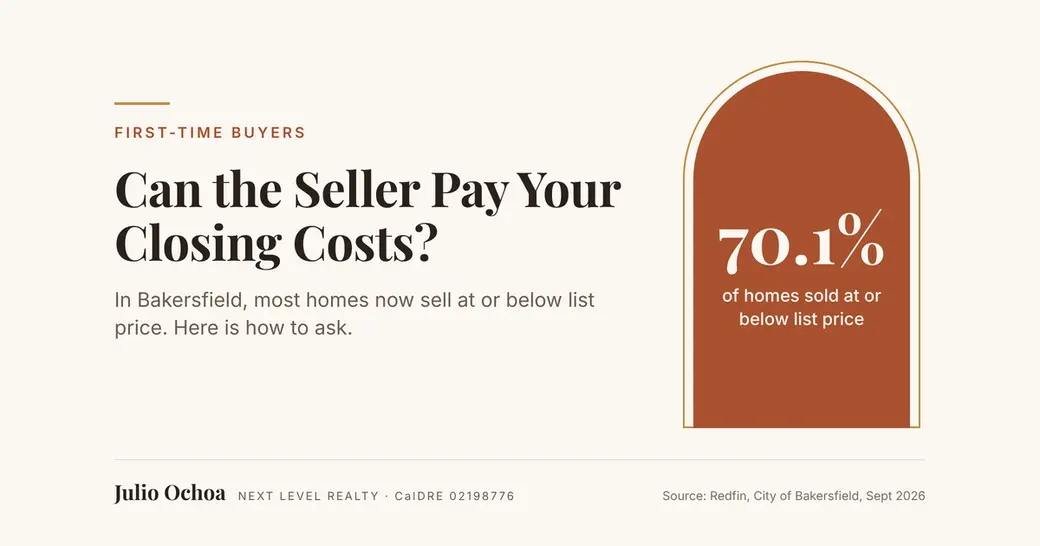
Yes, you can ask a Bakersfield seller to pay part of your closing costs, and this fall the market gives buyers more room to ask. In September 2026, 70.1% of Bakersfield homes sold at or below their list price, based on Redfin data. How much a seller can cover depends on your loan: FHA allows up to 6% of the price, and Fannie Mae conventional loans on a home you live in allow 3% to 9%.
What is a seller concession?
A seller concession, also called a seller credit, is money the seller agrees to put toward your costs of buying. It is written into the purchase contract and shows up as a credit on your closing statement.
The money does not come to you as cash. It pays bills you would otherwise pay at closing: lender fees, escrow and title charges, prepaid property taxes and insurance, and sometimes discount points that lower your interest rate.
Think of it this way. A credit is not the same as a lower price. It moves some of your closing bill to the seller, so you need less cash to get the keys. Sometimes a buyer negotiates both.
Why are seller credits back in Bakersfield right now?
Two things shifted this fall. Rates are higher than they were in late summer, and Bakersfield homes are taking a little longer to sell than a year ago.
Freddie Mac's weekly average mortgage rate was 7.32% on October 22, 2026, down from 7.40% the two weeks before but up from 6.65% on August 20, 2026. Higher rates can thin out the number of buyers ready to make an offer, which can give the ones who are ready more room to negotiate.
The local numbers show it. These are the most recent monthly figures, all for September 2026:
| Bakersfield market signal | September 2026 | Source |
|---|---|---|
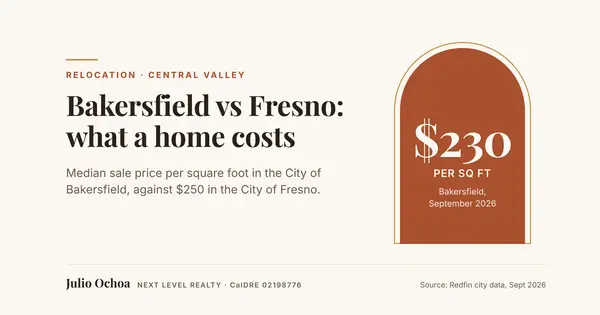
| Median sale price, City of Bakersfield | $419,800, up 1.2% from a year earlier | Redfin |
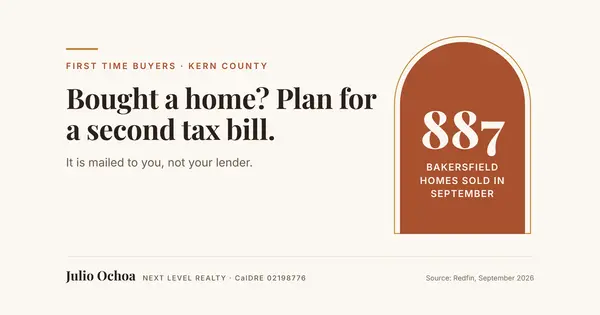
| Homes sold, City of Bakersfield | 887, down 6.6% from a year earlier | Redfin |
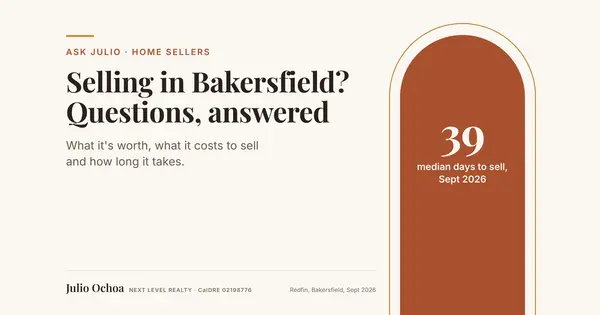
| Median days on market, City of Bakersfield | 39, up from 36 a year earlier | Redfin |
| Sold above list price | 29.9% | Redfin |
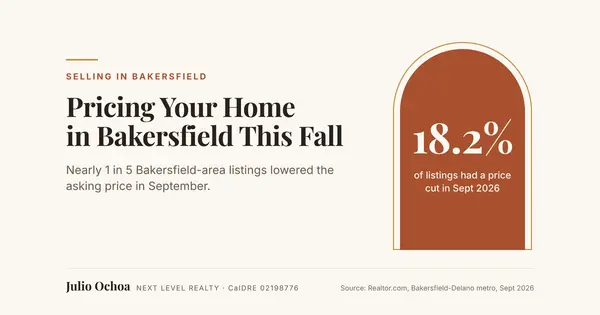
| Homes for sale with a price drop | 32.0% | Redfin |
| Active listings, Kern County metro | 2,443, up 6.7% from a year earlier | Realtor.com |
Redfin's 29.9% sold above list means about 70.1% sold at or below list, and 32.0% of homes for sale had a price drop. That does not tell us how many sellers paid credits, but it does tell us many homes are not getting bid up, which is when a request is most likely to be heard. I wrote more about that trend in what Bakersfield price reductions mean for sellers, and the same numbers work in your favor as a buyer.
How much can a seller pay toward my closing costs?
Your loan sets the ceiling, and the seller decides whether to agree. Lenders call these interested party contributions, and each loan program caps them as a share of the price.
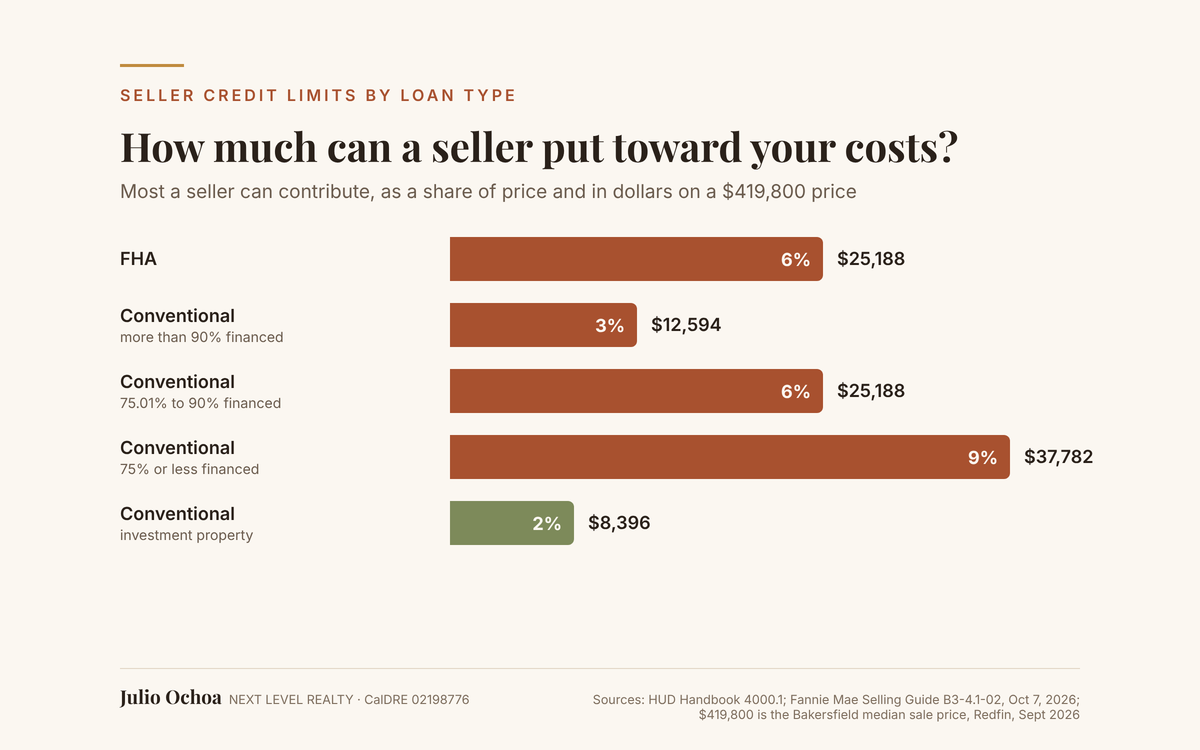
| Loan type | Most a seller can contribute | On a $419,800 price |
|---|---|---|
| FHA | 6% of the sales price | $25,188 |
| Conventional, more than 90% of the price financed | 3% | $12,594 |
| Conventional, 75.01% to 90% financed | 6% | $25,188 |
| Conventional, 75% or less financed | 9% | $37,782 |
| Conventional, investment property | 2% | $8,396 |
The FHA limit comes from HUD Handbook 4000.1. The conventional limits are Fannie Mae's, from Fannie Mae's Selling Guide, section B3-4.1-02, published October 7, 2026; other conventional investors and individual lenders can set their own limits. Both were read October 22, 2026. The dollar column is simple math on Redfin's September 2026 median sale price, an illustration only. Your lender applies the limit to your actual price and your actual costs.
Two rules matter more than the caps:
- A credit can only pay allowed costs. If the seller offers more than your actual allowable costs, the extra is not paid to you. FHA treats anything beyond actual costs as an inducement to purchase. Your lender confirms which fees qualify.
- A credit never covers your down payment. Fannie Mae does not allow seller money to be used for the down payment or for required reserves.
Is a seller credit better than a lower price?
Sometimes. It depends on what you are short on.
A lower price helps over the long run, since you borrow less and your property tax assessment generally starts from the purchase price. A credit helps right now. It cuts the cash you need at closing, which is often the thing that stops a first-time buyer.
Here is how I walk clients through it:
- Get your lender's estimate first. The Loan Estimate shows your estimated closing costs, so we ask for a number that fits instead of guessing.
- Check your cash. If closing costs are what stretches you, a credit can do more for you than the same amount off the price. Your lender can compare both.
- Ask about the rate. Part of a credit can pay discount points, which buy down your interest rate. Your lender can show you what that does for your situation.
- Read the home. A home with a price drop and weeks on the market may give us more room than one that just listed, but every seller's situation is different.
- Write it cleanly. The credit goes in the offer as a specific dollar amount or percent toward closing costs, so the lender and escrow can apply it.
If you have not talked to a lender yet, start there. My post on pre-approval versus pre-qualification explains why a pre-approval makes your offer stronger, credit request and all.
What is a rate buydown, and can a seller pay for it?
A buydown is money paid up front to lower your interest rate. It comes in two kinds.
- Permanent buydown. Discount points paid at closing lower the rate for the life of the loan.
- Temporary buydown. Money set aside lowers the rate for the first year or two, then it returns to the note rate.
A seller can pay for either one if your loan and lender allow that buydown, and both count toward the same caps in the table above. Fannie Mae and HUD both include interested party buydowns inside the limit.
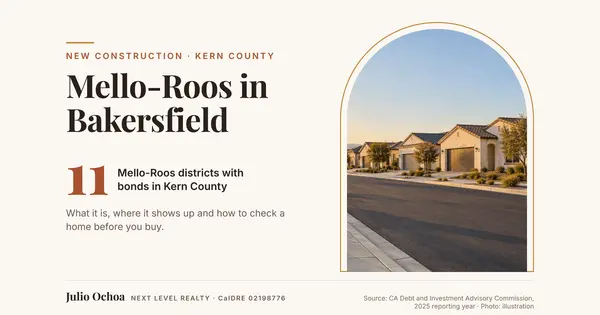
Some new home builders offer buydowns through their own preferred lender. That is a different setup with its own rules, and I covered it in how builder incentives work in Bakersfield. If new construction is on your list, the new construction questions page answers the common ones.
What can go wrong when I ask for a credit?
A few things, and it is better to know them before you write the offer.
- The appraisal. If we raise the offer price to make room for a credit, the home still has to appraise at that price. If it comes in low, the extra has to be worked out again.
- A weaker offer. On a home with several offers, a request for a credit can make yours look less attractive than a clean one. That is why we read each home first.
- Money left on the table. If the credit is larger than your final costs, the leftover does not come back to you. Ask for a number your Loan Estimate supports, and let your lender check it before we write the offer.
- Repairs mixed in. A credit after inspection is a separate negotiation. My post on repair requests after a home inspection covers that part.
What closing costs can a credit cover in Kern County?
Most buyer closing costs can qualify, subject to your loan program and your lender. In a typical Bakersfield purchase that includes:
- Lender fees, such as origination and underwriting
- Appraisal and credit report fees
- Escrow and title fees, including the lender's title policy
- Recording fees charged by the Kern County Recorder
- Prepaid items, such as homeowners insurance and property tax impounds
- Discount points, if you choose to buy down the rate
For a full line by line breakdown, see my guide to closing costs for Bakersfield first-time buyers.
Common questions
Can I ask for a seller credit on any home in Bakersfield?
You can ask on any home. Whether the seller agrees depends on the home, how long it has been listed and how many other offers are in. A home with a price drop or more time on the market may have more room to say yes.
Do seller concessions get paid to me in cash?
No. The credit pays your closing costs through escrow. If it is more than your actual costs, the extra is not paid out to you.
Can a seller credit be used for my down payment?
No. Fannie Mae does not allow seller contributions to fund the down payment or reserves, and FHA limits seller money to closing costs, prepaid items and discount points. Down payment assistance programs are a separate path, and a lender can tell you which ones fit you.
What is the most an FHA seller credit can be?
Up to 6% of the sales price under HUD Handbook 4000.1, and never more than your actual closing costs, prepaid items and discount points.
Does asking for a credit hurt my offer?
It can on a home with competing offers. On a home that has sat or already dropped its price, a reasonable request backed by your Loan Estimate is a normal part of the deal.
Who decides how much I can ask for?
Your loan program sets the maximum, your Loan Estimate shows what you actually need, and the seller decides whether to agree. I help put those three together into one number that makes sense in your offer.
More first-time buyer answers live on my first-time buyer questions page.
Where to start
If closing costs are the thing standing between you and your first home, a seller credit might close that gap. Let's get you in front of a lender first. Then we'll know the real number, and we'll ask for it on the right home. My first-time buyer roadmap walks through every step: Your First Home in Bakersfield. I'm here if you have any other questions, in English or Spanish.
Only a licensed lender can quote a rate, a payment or an APR for your situation. Equal Housing Opportunity.
Julio Ochoa | Next Level Realty | CalDRE 02198776 | 661-933-8428
Categories
Recent Posts