
What You'll Actually Pay in Kern County Property Taxes
If you're trying to pin down the Kern County property tax rate before you buy or sell a home here, the good news is there's a predictable base to work from, even though your final number depends on exactly where the property sits.
The Base Rate Every California Homeowner Starts With
Under California's Prop 13, every property in the state starts with a base property tax rate of 1% of assessed value. That 1% is the foundation, but it's rarely the whole story. Kern County, like most California counties, layers voter-approved local bonds and assessments on top of that base rate, which is a big part of why your actual bill often lands a bit higher than a flat 1%.
What Actually Lands on Your Bill
Most Kern County homeowners end up somewhere around 1.1% to 1.25% of assessed value once those local additions are factored in, though the exact figure depends on your specific tax rate area, meaning the city, school district, and any special assessment districts tied to your parcel. Two homes a few miles apart can carry different total rates simply because they sit in different tax rate areas, so a rate that applies to one street doesn't automatically apply to the next one over.
Why "Assessed Value" Isn't Your Home's Market Value
One of the most misunderstood parts of California property tax is the difference between assessed value and market value. Under Prop 13, your assessed value is generally set at your purchase price, and it can only increase by a maximum of 2% per year after that, even if your home's market value climbs much faster. That's a big part of why two neighbors with similar homes can have very different tax bills if one of them bought years before the other. It's also why your tax bill won't necessarily jump just because home values in your area are rising.
What Triggers a Reassessment
Your assessed value doesn't stay frozen forever. A change in ownership, meaning a sale, typically triggers a reassessment to current market value. New construction or major property improvements can trigger a partial reassessment as well, since the added value gets picked up separately. And if you're buying in a newer development, it's worth asking whether the property carries a Mello-Roos special tax district assessment, which shows up as its own line on the tax bill, on top of the base rate.
When the Bill Actually Comes Due
Kern County typically mails property tax bills in the fall, with payments due in two installments on deadlines set each year by the Kern County Treasurer-Tax Collector. Missing a deadline can trigger penalties, so once you know your due dates, it's worth marking them on your calendar rather than waiting for a reminder.
How to Verify Before You Buy or Sell
The numbers above are a helpful starting point, not a substitute for the real figure on a specific property. Before you write an offer or list your home, pull the most recent tax bill or the parcel record, and confirm the current assessed value and total rate with the Kern County Assessor's Office. That's the only way to know exactly what you, or a buyer, will actually owe.
Have questions about how property taxes work on a specific home you're considering? Comment below or text me at 661-933-8428 and I'll help you look up the numbers.
Categories
Recent Posts
Mello-Roos in Bakersfield: How to Check a Home Before You Buy
Seller Concessions in Bakersfield: What Buyers Can Ask For
Bakersfield vs Fresno: 2026 Home Price Comparison
Building an ADU in Bakersfield: 2026 Rules, Fees and Permits
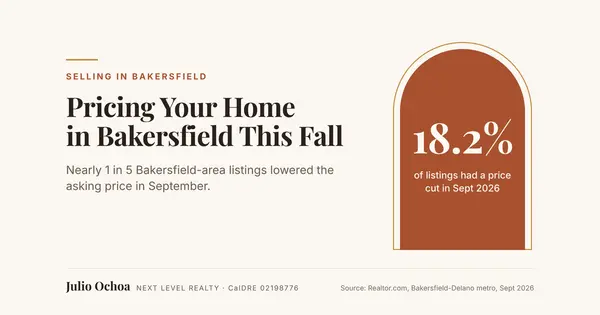
Bakersfield Price Reductions: What Sellers Should Know
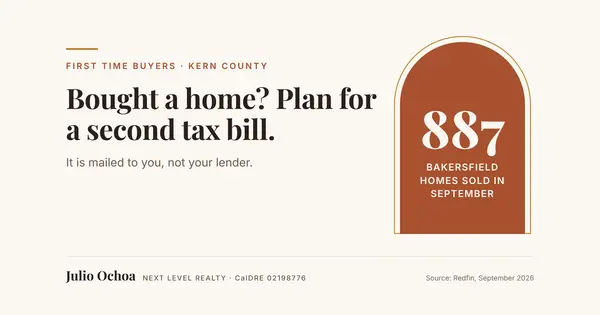
Kern County Supplemental Tax Bill: A Buyer's Guide
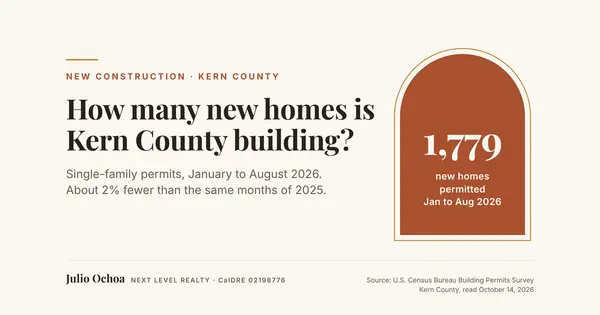
New Homes Being Built in Bakersfield: 2026 Permit Numbers

New Construction in Bakersfield: Your Questions Answered

Buying a Home in Bakersfield in a Year? Start Here
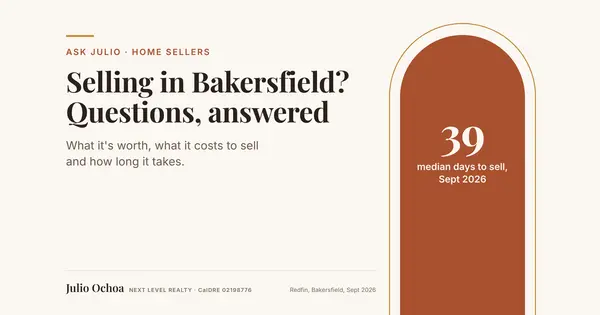
Selling a Home in Bakersfield: Your Questions Answered